
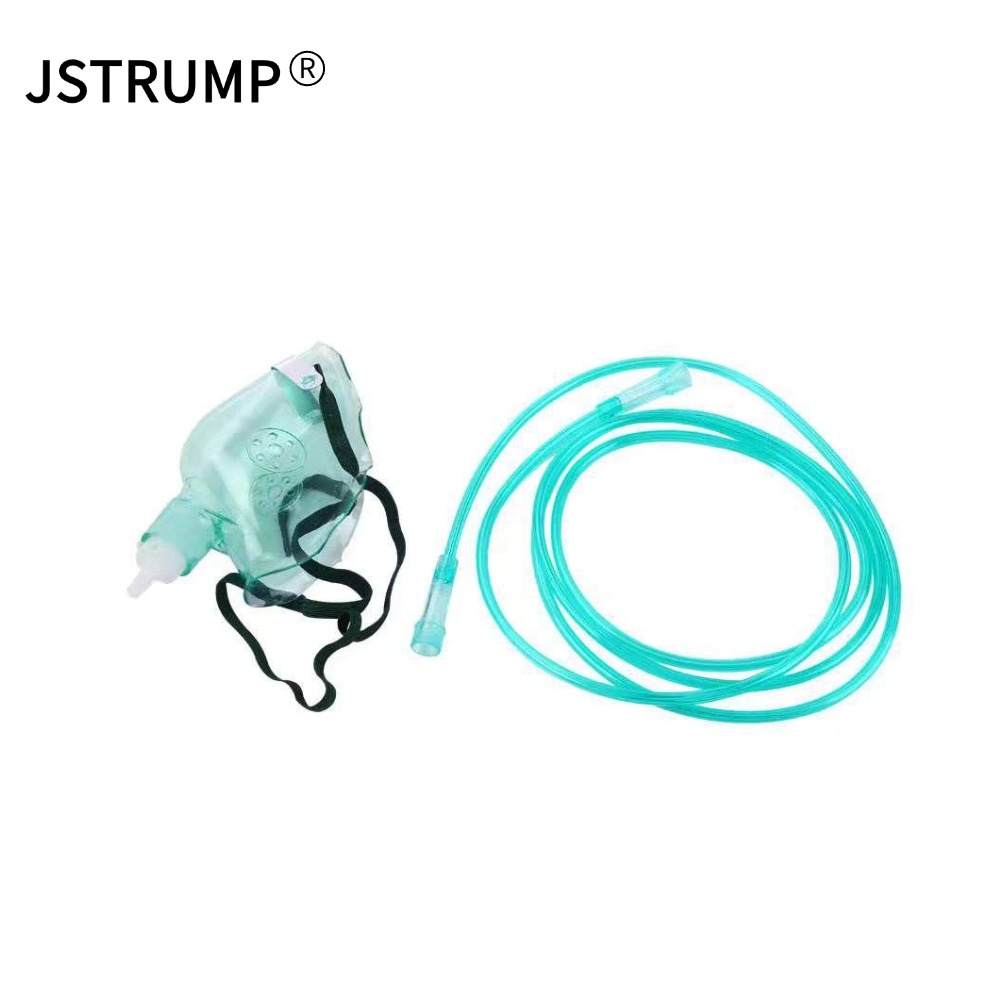
The demand for special-size disposable medical supplies continues to rise as healthcare providers
search for safer, more efficient, and more patient-specific solutions. A precision mold workshop
plays a critical role in this process by enabling the mass production of highly consistent, dimensionally accurate,
and application-specific disposable medical products. From custom blood collection accessories to tailored
catheter components, diagnostic housings, surgical consumables, and protective medical packaging, precision mold
manufacturing supports the medical industry with stable quality and scalable output.
This article provides a comprehensive, SEO-friendly overview of how a precision mold workshop is
put into use to customize special-size disposable medical supplies. It explains the definition,
key advantages, production process, material selection, quality requirements, industry applications, technical
specifications, and common product categories. The content is written for use in blogs, directory pages, industry
landing pages, and medical manufacturing resource pages.
A precision mold workshop is a specialized production environment designed for manufacturing
high-accuracy molds used in injection molding, blow molding, compression molding, and related forming methods. In
the medical supply industry, precision mold workshops are used to create molds that can reproduce extremely small
details, strict dimensional tolerances, and repeatable geometries for disposable products.
Unlike general-purpose mold production environments, a precision mold workshop focuses on tight control of machining
accuracy, surface finish, tooling performance, and mold life. This is especially important for
special-size disposable medical supplies, where even minor deviations can affect usability,
compatibility, safety, and regulatory compliance.
Disposable medical supplies are often designed for single-use convenience, infection control, and cost-effective
mass distribution. However, standard sizes do not always fit every clinical scenario. Hospitals, laboratories,
emergency response units, and specialized treatment centers frequently require products with non-standard dimensions
or customized structures.
A precision mold workshop makes it possible to develop these special-size products with consistent repeatability.
This is important for items such as:
By using precision molds, manufacturers can improve compatibility, reduce assembly errors, maintain hygiene, and
achieve reliable large-scale production of disposable medical products.
A precision mold workshop provides significant advantages when producing special-size disposable medical supplies.
These advantages are both technical and commercial, making precision mold development a strategic asset for
healthcare product manufacturing.
| Advantage | Description | Benefit for Disposable Medical Supplies |
|---|---|---|
| High Dimensional Accuracy | Advanced machining and inspection ensure exact mold dimensions. | Improves product fit, seal performance, and compatibility. |
| Repeatable Production | Each molded part is produced with consistent geometry. | Reduces variation in medical consumables and supports quality control. |
| Custom Size Capability | Molds can be designed for non-standard or special-size products. | Enables product customization for clinical and laboratory use. |
| Efficient Mass Production | Precision molds support high-volume manufacturing cycles. | Helps lower unit cost for disposable products. |
| Improved Surface Quality | Fine polishing and machining create smooth surfaces. | Enhances cleanliness, appearance, and patient safety. |
| Long Mold Life | Durable mold steels and optimized structure extend service life. | Reduces maintenance cost and production downtime. |
A precision mold workshop can support the customization of many disposable medical supply categories. These products
may vary in size, thickness, locking structure, inlet/outlet shape, connector standard, or packaging format. The
exact design depends on the clinical application, material properties, and compliance requirements.
| Product Category | Common Custom Features | Typical Use Cases |
|---|---|---|
| Diagnostic Components | Special cavity size, thin-wall structures, sealing features | Laboratory testing, sample handling, point-of-care devices |
| Catheter Accessories | Connector diameter, length, retention grooves, secure fit | Fluid transfer, drainage, infusion support |
| Surgical Consumables | Ergonomic shape, precise openings, disposable fastening parts | Operating rooms, procedure kits, sterile environments |
| Medical Caps and Closures | Thread size, snap-fit design, tamper-evident structures | Sample containers, medication packaging, storage systems |
| Protective Accessories | Custom dimensions, flexible edges, secure attachment points | Barrier protection, contamination prevention, sterile handling |
| Laboratory Consumables | Tube compatibility, narrow tolerances, sample-volume optimization | Research labs, clinical diagnostics, specimen processing |
Material selection is one of the most important decisions in disposable medical manufacturing. The chosen material
must be compatible with the product’s intended use, molding process, sterilization method, and performance
requirements. A precision mold workshop typically works with approved medical-grade polymers and related materials.
| Material | Main Characteristics | Typical Medical Use |
|---|---|---|
| PP (Polypropylene) | Lightweight, chemical resistant, cost-effective | Caps, containers, connectors, laboratory consumables |
| PE (Polyethylene) | Flexible, impact-resistant, easy to process | Tubes, protective components, soft closures |
| ABS | Rigid, strong, stable formability | Diagnostic housings, device shells, non-implant parts |
| PC (Polycarbonate) | High clarity, toughness, dimensional stability | Transparent covers, sample chambers, inspection windows |
| TPE/TPR | Soft-touch, elastic, good sealing performance | Gaskets, grips, flexible tips, sealing elements |
| Medical-Grade Silicone | Heat resistance, flexibility, biocompatibility | Soft seals, contact parts, special-purpose disposable items |
The process of putting a precision mold workshop into use for custom disposable medical supplies usually follows a
structured workflow. Each step helps ensure that the final product meets design expectations, production targets,
and medical quality standards.
Requirement Analysis: The product function, dimensions, usage scenario, and performance
requirements are identified.
Feasibility Review: Engineers evaluate whether the geometry can be molded efficiently and
whether the product needs special venting, gating, or wall-thickness control.
Mold Design: CAD and simulation are used to develop the mold structure, cavity layout, cooling
system, ejection system, and runner design.
Precision Machining: CNC machining, EDM, grinding, polishing, and high-accuracy fitting are
performed in the workshop.
Mold Assembly and Debugging: The mold is assembled and tested for movement, sealing, and part
release performance.
Trial Molding: Sample parts are produced for inspection, dimensional verification, and
functional review.
Quality Validation: The output is checked against specification requirements before mass
production begins.
Production and Maintenance: The mold is used for continuous production with regular cleaning,
inspection, and maintenance.
A precision mold workshop must maintain strict technical controls to support medical supply production. These
controls reduce defect rates and improve product consistency. Important requirements include machine accuracy,
environment control, and inspection capability.
| Technical Requirement | Purpose | Impact on Medical Products |
|---|---|---|
| High-Accuracy CNC Machines | Enable precise mold cavity and core machining | Improves dimensional consistency |
| EDM Equipment | Allows complex features and hard-to-machine shapes | Supports intricate medical part designs |
| Precision Grinding and Polishing | Refines mold surfaces and tolerances | Enhances finish and release performance |
| Temperature and Humidity Control | Stabilizes manufacturing conditions | Reduces dimensional drift and contamination risk |
| Quality Inspection Tools | Measure critical dimensions and surface condition | Ensures compliance with specification |
| Clean Manufacturing Practices | Minimize dust and foreign matter | Supports hygiene and cleanliness for disposable items |
Because disposable medical supplies are often used in sensitive environments, quality control must be strict and
well documented. Tolerance requirements depend on the product type, but precision mold workshops generally aim to
keep critical dimensions highly consistent across all production runs.
Quality control may include first article inspection, in-process measurement, visual inspection, functional testing,
and batch-based sampling. For special-size products, the focus is often on fit, sealing, wall thickness, connection
integrity, and stable release from the mold.
| Quality Control Item | Inspection Method | Purpose |
|---|---|---|
| Dimensional Accuracy | Calipers, coordinate measurement, gauges | Confirms product size and compatibility |
| Surface Finish | Visual checks, polishing inspection | Supports smooth appearance and cleaner use |
| Fit and Assembly | Functional fitting tests | Ensures the product works with related components |
| Leak Resistance | Pressure or sealing tests | Prevents fluid loss and contamination |
| Batch Consistency | Sampling inspection | Maintains uniform product quality across production lots |
| Cleanliness | Particle and surface condition inspection | Supports disposable medical safety standards |
The following table gives a general reference structure for specification planning. Exact values vary based on the
product design, material, mold structure, and application requirements. This type of specification table is useful
for catalog pages, inquiry forms, and industry articles.
| Specification Item | Typical Range or Option | Notes |
|---|---|---|
| Product Type | Caps, connectors, housings, seals, lab parts, accessories | Depends on target medical application |
| Size Customization | Standard, special-size, non-standard dimensions | Designed to match clinical or device requirements |
| Material | PP, PE, ABS, PC, TPE, medical-grade silicone | Selected by function and processability |
| Molding Method | Injection molding, overmolding, insert molding | Chosen according to product structure |
| Surface Finish | Matte, glossy, polished, textured | May affect handling and visual appearance |
| Tolerance Level | Tight, medium, or application-specific tolerance | Critical for fitting and sealing |
| Production Scale | Prototype, small batch, mass production | Based on demand and market planning |
| Sterilization Compatibility | ETO, gamma, steam, or non-sterile supply option | Depends on material and product use |
The use of a precision mold workshop helps manufacturers increase efficiency at both the design stage and the
production stage. When special-size disposable medical supplies are developed with accurate mold tooling, fewer
adjustments are needed during mass production. This reduces waste, shortens setup time, and improves output
stability.
Efficiency gains are achieved through:
Special-size disposable medical supplies are used across many healthcare sectors. Their role is not limited to
hospitals. They are also essential in labs, emergency care, home care, outpatient services, and medical device
assembly lines.
| Industry Area | Common Disposable Products | Role of Precision Mold Workshop |
|---|---|---|
| Hospitals | Custom caps, connectors, sterile accessories | Provides accurate and repeatable sizing |
| Laboratories | Sample containers, testing parts, tube accessories | Supports consistent sample handling and compatibility |
| Emergency Care | Disposable support items, quick-use connectors | Helps create reliable products for urgent use |
| Medical Device Assembly | Housing parts, sealing parts, custom-fit consumables | Enables precision matching with devices |
| Home Healthcare | Single-use treatment accessories and care parts | Improves convenience and user safety |
| Clinical Research | Experimental consumables and trial components | Supports testing with special dimensions and formats |
For content optimization, the following keyword themes are highly relevant to this topic. They can be distributed
naturally throughout a blog post, category page, or service page to improve search visibility while maintaining
readability.
The main purpose is to produce highly accurate molds that can be used to manufacture disposable medical supplies
with consistent dimensions, repeatable quality, and special-size customization capability.
They help solve compatibility issues, support specific clinical workflows, improve user convenience, and provide
better fit and function in medical and laboratory environments.
Common materials include PP, PE, ABS, PC, TPE, and medical-grade silicone, depending on the product’s function and
performance requirements.
Injection molding is the most common method, but overmolding and insert molding are also used for certain special
structures and multi-material components.
The most important factors include dimensional accuracy, sealing performance, surface finish, cleanliness, fit
consistency, and stable batch output.
A precision mold workshop put into use to customize special-size disposable medical supplies is a
highly valuable capability for the modern healthcare supply chain. It supports the production of custom medical
consumables, improves product consistency, enhances compatibility, and helps manufacturers respond to diverse
market needs. With the right mold design, material selection, precision machining, and quality control, disposable
medical products can be produced efficiently at scale while maintaining the accuracy and reliability required by
medical applications.
For businesses building blog content, directory pages, or industry landing pages, this topic offers strong SEO
potential because it combines high-intent keywords, technical relevance, and broad application value. Precision
mold manufacturing is not only a production method; it is a foundation for innovation in special-size disposable
medical supply customization.
```
This website uses cookies to ensure you get the best experience on our website.



 Phone
Phone
Comment
(0)