
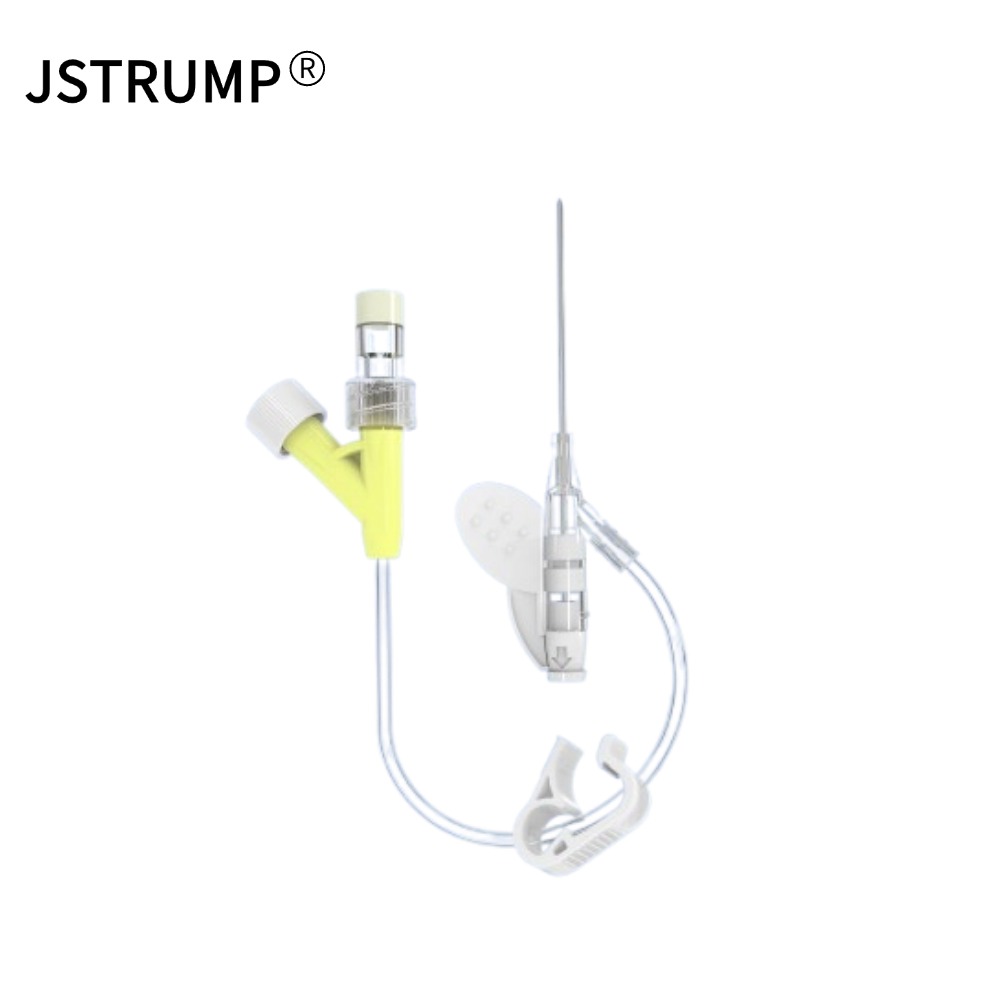
The global healthcare supply chain continues to evolve, and one of the most important trends in the industry is the
ongoing expansion of professional medical consumables manufacturing workshops. As hospitals,
clinics, laboratories, emergency care providers, and distributors demand higher volumes of safe and reliable
products, manufacturers are investing in cleanroom workshop expansion, advanced sterilization
systems, and smarter production layouts to increase sterile goods output. This development is
particularly relevant for businesses producing high-demand items such as surgical masks, disposable gloves,
syringes, wound care products, swabs, infusion accessories, examination supplies, and other medical
consumables.
A completed workshop expansion is more than a physical upgrade. It represents improved production efficiency,
stronger contamination control, better compliance with international quality standards, and greater supply stability
for the healthcare market. For buyers, distributors, and procurement teams, workshop expansion signals that a
manufacturer is prepared to handle growing order volumes while maintaining consistent product quality and sterility.
For the industry as a whole, it reflects a broader shift toward scalable, technology-driven, and regulation-focused
medical consumables production.
A professional medical consumables manufacturer is a company that specializes in producing
single-use or limited-use healthcare items designed for diagnosis, treatment, infection control, patient care, and
laboratory operations. These products are typically used once or for a short period and must meet strict
requirements for cleanliness, safety, material compatibility, packaging integrity, and in many cases, sterility.
Professional manufacturers usually operate under controlled production environments, including cleanrooms, sterilized
packing areas, quality inspection laboratories, and validated production lines. Their workflows are designed to
support regulatory compliance, consistent batch performance, and traceable quality management from raw material input
to final shipment.
Workshop expansion is a strategic investment in manufacturing capacity, cleanliness, and process control. As demand
grows across healthcare and life sciences markets, manufacturers must expand production areas to support larger
batch sizes, reduce bottlenecks, and improve sterile packaging output. In the medical consumables sector, where
product quality directly affects patient safety, workshop expansion can deliver several operational benefits.
In practical terms, workshop expansion enables a manufacturer to respond to seasonal demand spikes, emergency procurement
needs, public health events, and long-term growth in domestic and international markets. This is especially important
for sterile medical consumables, where production conditions, packaging processes, and logistics
must all work together to protect product integrity.
The decision to expand a workshop is typically driven by a combination of market demand, quality requirements,
automation opportunities, and supply chain resilience. Sterile goods production requires specialized environments,
and even small changes in output often require careful upgrades to facility layout, air handling systems, equipment
capacity, and quality assurance procedures.
| Expansion Driver | Description | Impact on Output |
|---|---|---|
| Rising healthcare demand | More hospitals, clinics, and distributors require reliable consumable supply. | Supports higher batch volume and longer production runs. |
| Need for sterile packaging | Many medical products require sterile sealing and validated packaging systems. | Increases demand for dedicated sterile packing zones. |
| Regulatory compliance | Manufacturers must meet strict cleanliness and process control standards. | Requires larger and better-controlled workshops. |
| Automation upgrades | New machinery can increase line speed and reduce manual contamination risk. | Improves throughput and consistency. |
| Supply chain resilience | More capacity helps reduce disruption risk during high-demand periods. | Improves delivery reliability. |
Expanded production spaces are often used to support a broad range of healthcare consumables. Depending on the
manufacturer’s specialization, these may include disposable products, sterile products, diagnostic accessories,
and infection prevention items. Each product category may require different material handling, molding, assembly,
packaging, or sterilization procedures.
| Product Category | Typical Examples | Production Requirement |
|---|---|---|
| Infection control supplies | Face masks, isolation gowns, caps, shoe covers | Clean processing, high-volume packaging |
| Injection and infusion consumables | Syringes, needles, IV components, connectors | Sterile assembly, precise molding, sealing |
| Wound care products | Gauze pads, bandages, dressing kits, swabs | Material purity, sterile packing |
| Diagnostic consumables | Sample cups, test accessories, collection swabs | Low contamination environment, traceability |
| Laboratory consumables | Pipette tips, specimen containers, trays | Dimensional accuracy, dust control |
| General patient care items | Disposable bed sheets, underpads, patient bibs | Material consistency, scalable output |
One of the most important elements in medical consumables workshop expansion is the design of the cleanroom and
production environment. Sterile goods output depends heavily on air quality, temperature control, humidity control,
personnel flow, and the separation of clean and dirty zones. A well-planned workshop expansion usually includes new
cleanroom segments or upgraded controlled areas that support the product’s sterility and safety requirements.
Cleanroom design is generally based on the product type and production process. For example, sterile packaging
workshops require different contamination control measures than non-sterile disposable product lines. In many cases,
the expanded space must support multiple hygiene zones, transition areas, and inspection points to prevent cross
contamination.
| Cleanroom Element | Purpose | Benefit for Sterile Goods |
|---|---|---|
| Air filtration system | Removes particles from production air | Helps maintain clean processing conditions |
| Positive pressure control | Prevents external air from entering clean zones | Reduces contamination risk |
| Controlled humidity and temperature | Stabilizes production environment | Supports material performance and sterility |
| Personnel gowning area | Controls worker entry into clean zones | Improves hygiene discipline |
| Material transfer corridor | Separates raw and finished product movement | Prevents cross contamination |
| Final packing room | Dedicated area for sealing and carton packing | Protects sterile product integrity |
When a manufacturer completes a workshop expansion, the increase in sterile goods output can create value throughout
the healthcare supply chain. Higher output is not just about volume; it is also about consistency, product availability,
and the ability to serve more markets without sacrificing quality.
These benefits make workshop expansion especially relevant for businesses competing in fast-moving healthcare markets.
Procurement teams often look for suppliers capable of maintaining long-term capacity, strong quality systems, and
reliable sterile packaging standards.
Although exact workshop configurations vary, a typical expansion project for medical consumables production may
include the following technical and operational specifications. These specifications are useful for industry pages,
procurement guides, and SEO-focused blog content because they describe the standard features buyers often evaluate.
| Specification Item | Typical Range / Requirement | Industry Purpose |
|---|---|---|
| Production environment | Controlled cleanroom or semi-clean workshop | Supports hygienic and sterile manufacturing |
| Air cleanliness level | Defined by product and regulatory standard | Minimizes particle contamination |
| Temperature control | Stable, monitored, production-appropriate range | Maintains process consistency |
| Humidity control | Controlled to prevent material deformation | Protects packaging and raw materials |
| Floor layout | Separate zones for raw materials, processing, sterilization, and packing | Improves workflow and contamination prevention |
| Sterilization method | May include steam, EO, radiation, or validated external sterilization | Ensures product sterility where required |
| Inspection process | Visual, dimensional, and functional checks | Supports quality consistency |
| Packaging format | Individual sterile packs, bulk packs, cartons, or customized packaging | Protects product integrity during transport |
| Traceability system | Batch coding and production record control | Supports recall management and compliance |
| Quality standards | ISO-based quality management, GMP-oriented controls, and market-specific requirements | Ensures market acceptance and safety |
Quality control is one of the strongest arguments for workshop expansion in the medical consumables sector. A larger
facility allows manufacturers to divide processes into more specialized areas, which helps reduce human error, cross
contamination, and production inconsistency. It also creates more room for inline inspection, laboratory testing,
and final audit procedures.
Common quality control improvements after expansion may include better incoming material inspection, enhanced process
monitoring, stricter sampling procedures, improved finished product testing, and more reliable packaging verification.
With a larger and better-organized workshop, manufacturers can implement standardized quality checkpoints without
slowing down throughput.
Buyers in the healthcare sector often evaluate suppliers based on capacity, consistency, certifications, delivery
speed, and the ability to meet custom requirements. A completed workshop expansion can strengthen all of these
purchasing factors. For distributors, this may translate into a more reliable supply chain. For hospitals and
clinics, it may mean improved access to essential consumables. For procurement teams, it provides greater confidence
in long-term supplier performance.
| Buyer Concern | How Workshop Expansion Helps | Commercial Value |
|---|---|---|
| Product availability | Increases output and stock readiness | Reduces shortage risk |
| Quality consistency | Improves process control and inspection capability | Builds procurement confidence |
| Delivery lead time | Removes production bottlenecks | Speeds up fulfillment |
| Compliance assurance | Supports better documentation and controlled environments | Improves supplier credibility |
| Customization needs | Creates space for different product formats and packaging | Supports private label and OEM opportunities |
Medical consumables manufacturing often follows recognized international standards and local regulatory frameworks.
These may vary by product type, target market, and intended use. Workshop expansion projects are frequently planned
around these standards to ensure that production spaces, equipment, documentation, and quality systems are aligned
with compliance needs.
Because regulatory expectations can differ by country and product category, a workshop expansion is often paired with
documentation upgrades, validation protocols, and improved staff training. This helps ensure that increased output
does not compromise compliance.
A workshop expansion project can include new operational features that improve production scale and sterile control.
These additions are commonly designed to support efficiency, safety, and long-term capacity growth.
| Feature | Function | Operational Benefit |
|---|---|---|
| Automated packaging line | Speeds up final packing and sealing | Increases throughput |
| Dedicated storage area | Separates raw materials from finished goods | Improves inventory control |
| Air shower entrance | Removes dust from personnel or materials entering clean zones | Reduces contamination risk |
| Inspection laboratory | Supports product testing and quality checks | Improves batch acceptance accuracy |
| Digital monitoring system | Tracks environmental conditions and process data | Enhances traceability and control |
| Separate sterilization room | Handles sterilization process or pre-sterile preparation | Protects workflow separation |
For content planning and search visibility, this topic naturally connects to a wide range of SEO-friendly keywords.
These terms can be used in blog posts, directory pages, category pages, supplier guides, and industry landing pages.
When used strategically, they can support Google indexing and improve topical relevance.
Workshop expansion is especially valuable for manufacturers that offer OEM or private label services. Larger and more
organized facilities can better accommodate custom printing, packaging adjustments, label placement, product
variations, and batch separation for different clients. This is important for distributors and brand owners who need
flexible manufacturing while still expecting sterile output and reliable quality control.
In OEM and private label production, the manufacturer must often handle multiple packaging styles, branding
requirements, and product specifications. A broader workshop layout helps organize these workflows without mixing
production runs or reducing hygiene standards. As a result, expanded workshops can support both standard catalog
products and customized healthcare consumables.
The production flow in an expanded workshop is usually designed to move logically from raw materials to finished
sterile goods. Proper workflow design reduces bottlenecks and protects product hygiene at every stage. While exact
processes vary by product, the general structure is similar across the industry.
| Workflow Stage | Primary Activity | Main Objective |
|---|---|---|
| Material receiving | Incoming raw materials are checked and stored | Confirm quality at entry |
| Preparation | Materials are cleaned, cut, molded, or assembled | Prepare components for production |
| Processing | Products are formed or assembled on dedicated lines | Create finished units efficiently |
| Sterilization | Products are sterilized if required | Achieve sterility assurance |
| Final packaging | Products are sealed and labeled | Protect sterility and identify batches |
| Storage and shipment | Finished goods are stored and prepared for dispatch | Maintain product integrity until delivery |
Beyond immediate output improvements, workshop expansion supports long-term business growth. It allows manufacturers
to scale product lines, improve resilience, attract larger buyers, and compete more effectively in a demanding
medical supply market. In a sector where trust, compliance, and supply continuity are crucial, expanded sterile
goods production capacity can become a major competitive advantage.
Companies that invest in workshop expansion often position themselves for more advanced production technologies,
future automation, expanded export opportunities, and stronger partnerships with healthcare distributors. For the
industry, this means more stable supply chains and better access to essential healthcare products.
The completion of a workshop expansion by a professional medical consumables manufacturer is a significant
milestone in the healthcare supply industry. It supports higher sterile goods output, strengthens contamination
control, improves production efficiency, and helps manufacturers meet rising demand with greater reliability.
Whether the focus is on disposable medical supplies, sterile packaging, diagnostic consumables, or patient care
products, workshop expansion plays a central role in modern medical consumables manufacturing.
For buyers, distributors, and industry professionals, this development reflects a stronger commitment to quality,
scalability, and supply continuity. For search engines and content publishers, the topic offers a highly relevant
cluster of keywords, definitions, specifications, and operational insights that can support SEO performance across
blogs, category pages, landing pages, and industry directories.
As the healthcare sector continues to demand safer, cleaner, and more efficient supply chains, the expansion of
professional medical consumables workshops will remain an important trend shaping the future of sterile goods
manufacturing.
```
This website uses cookies to ensure you get the best experience on our website.



 Phone
Phone
Comment
(0)